ChatPEP Team
The ChatPEP team posts here when something in the product changes: a new PEP model release, a new feature, or an update to the iOS or web app. It also writes the guides: drafted by ChatPEP's own tools from the help center and the research, checked against both before they publish, and revised in place when the product changes. These posts describe what the product does, not what a study found.
Posts
Guide6 min read
How to tell a rat study from a human trial
Most headlines about a peptide hide the species behind the finding. Learn to spot whether a claim rests on a rat study or a human trial, and what each level of evidence can and cannot tell you.
Product update1 min read
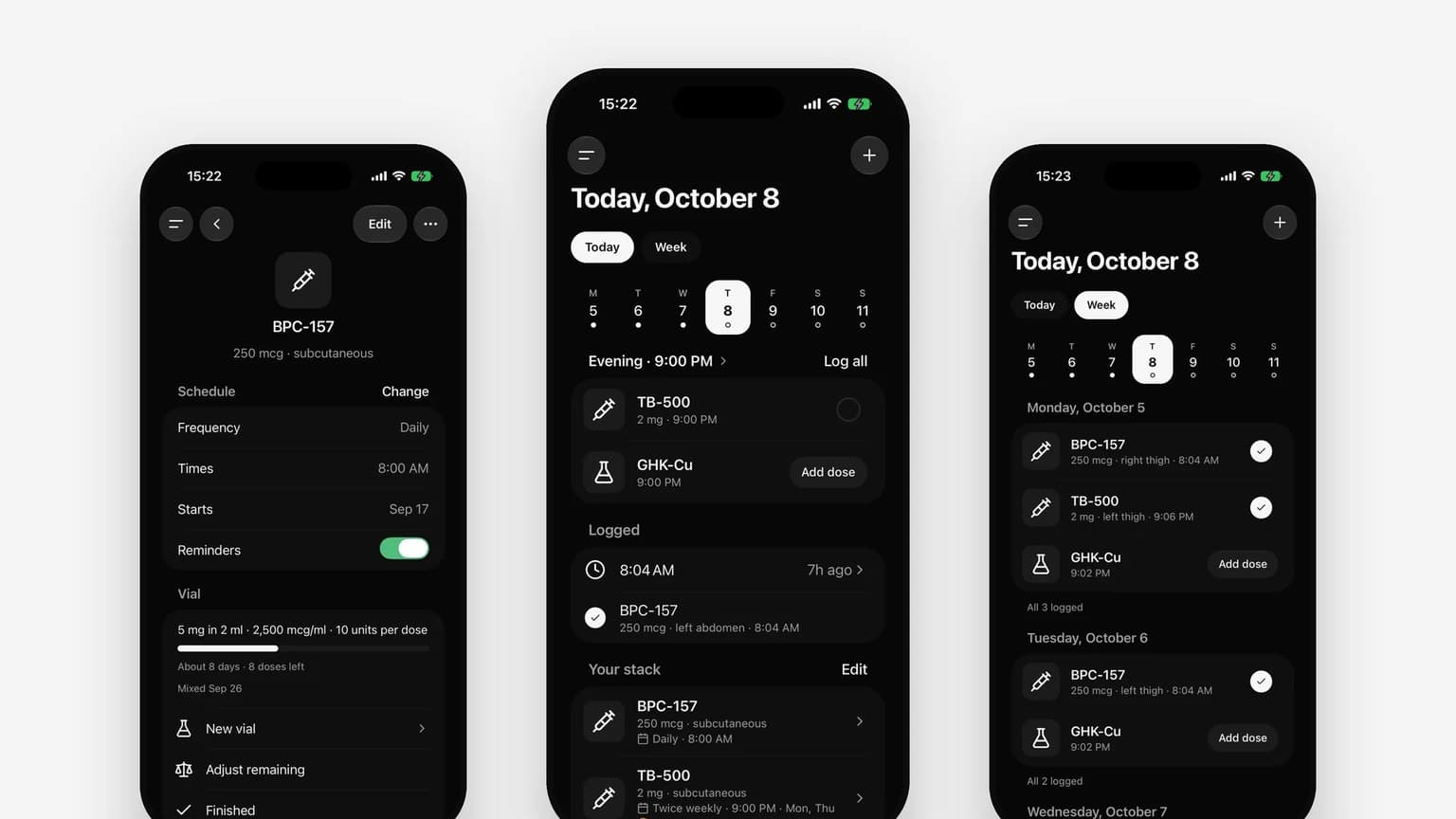
Introducing Today and My Stack
A tracker for what you run: add a peptide, set its schedule, log each entry with one tap, and keep every vial counted. Free on every plan.
Guide3 min read
Keeping track of what you are researching
What to write down about each compound you research, why a saved list beats a chat scrollback, and how My Stack shapes later answers without becoming a plan.
Guide5 min read
Asking a follow-up that narrows an answer
A broad question gets a broad answer. The second question is where you choose the population, outcome, or study design.
Guide4 min read
How to research a peptide for recovery without guessing
A plain walkthrough for checking what has been studied for a recovery goal, in whom, with what results, and where the evidence thins out.
Guide4 min read
How to check a peptide against a medication you take
A checklist for finding out whether a peptide has been studied alongside a medication, what an interaction warning points to, and how to read the evidence.
 PEP3
Release2 min read
Introducing PEP 3
The world's most advanced AI model for peptide research. Every claim opens the study behind it.
Guide3 min read
How to check the math when two vials share a syringe
Two compounds in one syringe means two concentrations to track. This checklist shows which number stays fixed, which changes, and how a blend calculator keeps each share separate.
Guide4 min read
What a reconstitution result shows, and what it leaves out
A reconstitution calculator converts vial size, water, and an entered amount into concentration, units, and doses per vial. This guide explains what each result line means and what the math leaves out.
Guide4 min read
What happens to your numbers when you add more water
Adding bacteriostatic water lowers concentration, so the same milligram amount lands on a different syringe line. Here is the math and the check.
Guide3 min read
How to work out mcg per unit on an insulin syringe
A plain walkthrough that starts with the vial label and water volume, builds a microgram-per-unit table, and shows the same arithmetic in a reconstitution calculator.
Guide3 min read
What to look for in a research tool for peptides
Six tests any research tool should pass before you trust it: it shows the study, states the evidence level, reports doses without advising, checks your medications, does the math, and remembers what you are researching.
 PEP2.1
Release2 min read
Introducing PEP 2.1
Ten compounds join the knowledge base, from teriparatide's randomized trials to the Khavinson bioregulators, each covered from the primary literature with its evidence level stated.
 PEP2
Release2 min read
Introducing PEP 2
Full coverage across all 54 compounds in the library, plus Protocol memory and Pulse: PEP now carries your protocol across conversations and follows up before you ask.
 PEP1
Release1 min read
Introducing PEP 1
The world's first AI model built for peptide research. It opens with the 20 compounds people ask about most, each answered from the studies and cited.